
Parents are increasingly ill-prepared to deal with such a complex and challenging task of educating children. Society changes quickly and does little or nothing to help parents. There is no agency that takes on this delicate task and tries to address issues related to bringing up and educating children with competence and determination. Until now, the Science of Education has been geared towards a consumer society that serves financial, economic and political interests. However, it must recover its “mission” and place itself coherently and decisively at the service of man, the family and its values. The failure to do so will lead to the moral, civil and cultural decay of the society of the future, which is increasingly oriented towards an often improper use of technology and incapable of meeting the fundamental needs of man. In this sense, it must begin to take ownership of some great truths concerning the promotion of well-being, health and the prevention of discomfort and illness, which are set out below:
- Education is a process that takes place inside the human being (from the Latin verb educĕre “to draw out that which lies within”) and not outside, in the environment, as is the case for instruction; it primarily involves parents and only secondarily other agencies, such as kindergartens, schools, community services, etc.
- As modern epigenetics proves, education begins with conception, when the foundations of future psychic and physical development are laid. This requires each parent to prepare themselves to give their best to their child in order to avoid unpleasant surprises. They must be aware that this process takes place first within them, involving the female archetype in the mother and the male archetype in the father, then in their bodies, in order to finally allow the ovum and sperm to fuse and fertilisation to take place.
- Education has a global character and is aimed at the person as a whole; it is conveyed by contact, by a feeling in the heart and is manifested in the intimate and profound relationship established between parent and child, based on acceptance, appreciation and respect for the dignity of the other.
- Education is the fruit of a continuous circular interaction, made up of a succession of proposals and counterproposals within a creative dialogue, particularly with the mother, in which the child participates in a self-aware manner. The child is present to himself, others, and to the outside world. In this way, the child can learn to come out of his natural isolation and live in the relationship.
- Education considers the conceived child to be endowed, alongside inheritance and environment, with his own psyche, characterised by individuality and intentionality, which makes him an active protagonist and director of his “own destiny” as well as capable of collaboration. That is why it is important for parents to share their experiences with their children starting from the womb.
- Bringing up and educating a child means to recognise, make one’s own, accompany and support the life project present in every human being from conception. It represents the reason for the child’s existence, guides his development, and aims to improve this world. Acting in this way makes it possible to increase the joy of living and avoid all forms of limitation and suffering produced by alienation.
- Education, what to bring out, is primarily aimed at the child’s inner world and the qualities found in him, in his psyche (or rather soul), such as vitality, joy, confidence, consistency, naturalness, simplicity, authenticity, purity and essentiality. These qualities express the human potential of the child. They should be recognised, developed and utilised in the common interest, especially by parents, also to prevent their gradual, slow and inexorable disappearance.
- For the child, education is, above all, to feel that he lives in the heart of his parents, mother and father, to find them within himself. They represent the two fundamental components of the child’s existence, the male and the female, which must be continually in tune and synchronised with each other to ensure and foster harmonious, integrated and stable growth.
- A child must be raised and brought up in a healthy, clean and loving environment, devoid of all forms of physical and mental garbage and able to protect the child from possible pollution, stress, trauma or negative interference of a consumerist nature (e.g. advertising). This is so as not to divert or hinder the child’s path and allow him to be himself and foster his growth.
IN SUMMARY: the new way of educationg a child considers both the role of conception and gestation to be decisive since both contribute through experience (the result of the continuous interaction between the individual and the environment) to the formation of temperament, character and personality and therefore, in its totality, to the human being, the citizen and person of tomorrow.
NATIONAL ASSOCIATION OF PRENATAL PSYCHOLOGY AND EDUCATION
•Head office c/o Via Padova, 37 31015 Conegliano (TREVIS) tel. e fax +39+0438/73429 • C. F. 97241240155 P.I. 03647320260
Sito: www.anpep.it
Dr. Gino Soldera Vicolo Calle Spin, 25 – 31010 Mareno di Piave (TV) tel. and fax +39+0438/30269 cell. 338/4007160
Email: ginosoldera@gmail.com
Youtube: https://www.youtube.com/@anpepconegliano9233
The business paradigm is changing, and it can be said that it is changing rapidly, especially in large organisations.
Gone is the conception of the company as an entity whose sole objective is to obtain profits for its owners or shareholders through the products and services they sell on the market.
On the contrary, there is a growing tendency to consider companies as agents of social transformation. Agents committed to their environment and the society in which they find themselves, and even to humanity and the planet as a whole.
Corporate social responsibility, triple bottom line (economic, social and environmental), conscious leadership, corporate humanism, conscious organisations… all these terms have something in common.
They are the expression of this new corporate paradigm which, while it is true that it sometimes remains mere words or a simple marketing strategy, it is also true that in other cases it goes further and constitutes the manifestation of a genuine, serious and responsible attitude.
Added to this is the fact that, especially the younger generations, are increasingly demanding, as consumers or workers, that the companies they buy from or work for have a “raison d’être” that goes beyond the purely economic to take into account social or environmental aspects.
Another trend in the corporate world, which is in line with this, is the emphasis on the health and well-being of employees.
It is not uncommon to see companies offering their employees courses on mindfulness, nutrition, physical exercise or healthy lifestyle habits, to name but a few.
In addition to this, the family dimension of employees is also gaining importance in the corporate world, and family reconciliation policies are a good practice that demonstrates this.
This is also shown, albeit to a lesser extent, by the involvement of companies in early childhood care, both for their own employees’ children and in general.
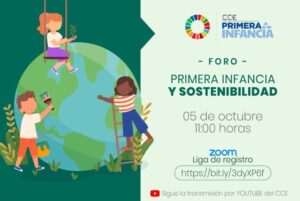
In this respect, a forum has recently taken place which I consider particularly relevant and encouraging. It was the “Forum on Early Childhood and Sustainability”, held online on 5 October 2022, organised by the “Red CCE (Consejo Coordinador Empresarial de México) por la Primera Infancia” (CCE Network -Mexican Business Coordination Council- for Early Childhood).
In this context (certainly more and more favourable), an idea that I had been nurturing since the end of 2010, gradually took shape over the years, and started to gain momentum.
And that has resulted in the manuscript I finished writing this summer: “Natural Prenatal Education, Sustainability and Corporate Social Responsibility”, which is already on the table of a major publishing house that is waiting to obtain the financial resources for its publication (via sponsorship and/or donations).
The objectives of this manuscript (and, I hope, of the future book) are the following:
- To disseminate Natural Prenatal Education.
- To show the relationship between Natural Prenatal Education and sustainability and corporate social responsibility.
- To involve companies in Natural Prenatal Education.
- To begin to create and disseminate another project that I have been thinking about for a long time: the creation of an “Ibero-American Network of companies and organisations that are friends of Natural Prenatal Education”.
This book is therefore intended to contribute to something that I consider very important: the introduction of Prenatal Education in the corporate field.
I am currently running a campaign to try to get sponsors, among companies and organisations that can “resonate” with “the idea”. This serves (independently of the financial results that can be achieved) to make the “idea” known.
It would be great if this long cherished “dream” could begin to materialize with the publication of this book and its subsequent dissemination.
I hope that this will be the case.
Manuel Hurtado Fernández
Madrid, 17 November 2022
ERASMUS PROJECT +
2017-2019
The Erasmus + project: “Parental Education and Awareness of Community to Enable Social Inclusion of Teens Exposed to the Risk of Becoming Parents” (PEACE SITE) was conducted between September 2017 and August 2019 by a consortium of 7 partners and coordinated by the Prenatal Education Association of Romania, joined by 4 similar associations from Greece, Cyprus, Belgium and Latvia, the University for Foreigners of Perugia, as well as a Romanian partner, the Romtens Foundation.
As part of this project, a comparative study was carried out with the participation of 398 parents from partner countries. Its purpose was to identify the needs of family members regarding communication with children on issues of sex education, as well as parental education. The study can be viewed here.
Based on the results of the study, several outputs were produced as part of the project:
The OMAEDU platform: www.omaedu.ro, which hosts:
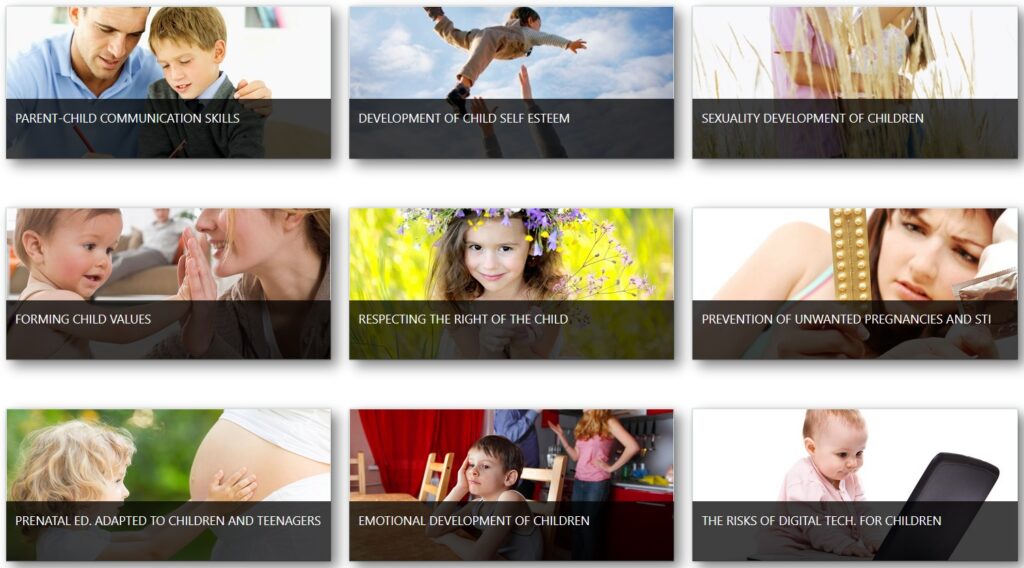
a. 9 e-learning modules for parents, teachers, children and adolescents, aimed at (1) improving communication between young people and the adults who care for them, (2) contributing to respect for children’s rights and child protection, and (3) strengthening young people’s self-esteem. Participants (university graduates) who complete the 9 e-learning modules and pass the final evaluation may obtain a certificate from the University for Foreigners of Perugia, worth 3 university credits (CFU, ECTS).
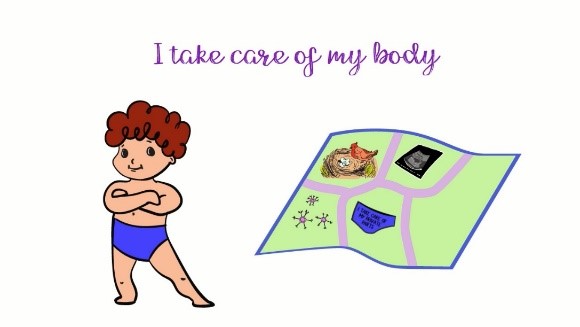
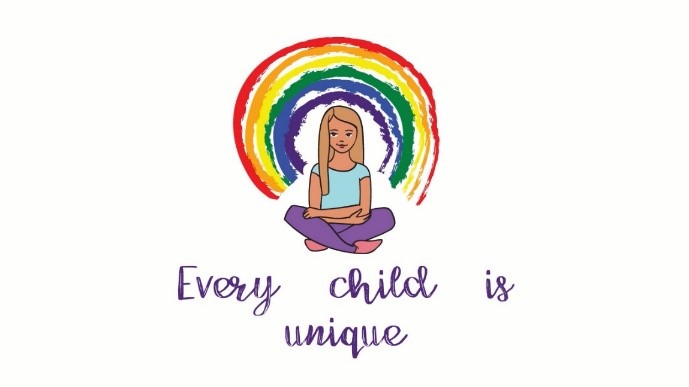
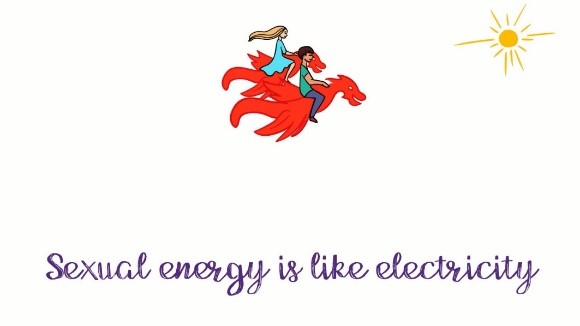
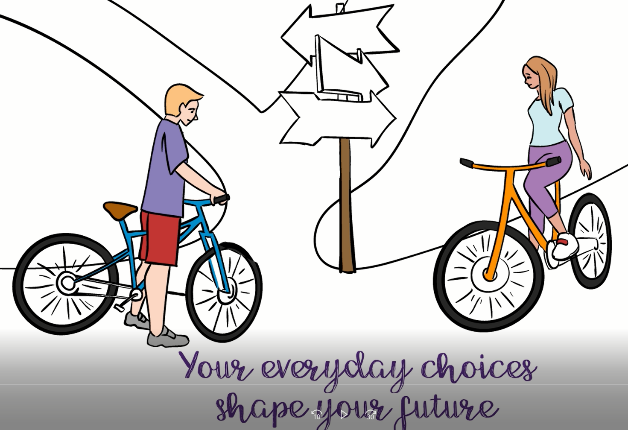
b. 4 animation videos for parents and children, targeting 4 age categories: I Take Care of My Body (2–4 years), Every Child Is Unique (5–8 years), Sexual Energy Is Like Electricity (9–12 years), and Your Everyday Choices Shape Your Future (13–18 years).
An Android application, CHECK PACCS, which can be downloaded free of charge on Google Play and has two parts:
a. weekly messages received by subscribers to help them improve parent-child communication;
b. a journal consisting of 8 checklists to assess the quality of parent-child communication for different age categories.
Access to all PEACE SITE project products is free of charge, with just one click and online registration on the www.omaedu.ro platform.
We look forward to seeing you there!
ERASMUS PROJECT +
2019-2021
The Erasmus + project: “Parenthood Awareness before Conception to Enhance Offspring Health – E-learning Addressing Lifestyle to Transform Habits” – PACE OF HEALTH started in August 2019 with a consortium of 7 partners and was coordinated by the Prenatal Education Association of Romania, joined by 4 similar associations from Greece, Cyprus, Belgium and Latvia. These 5 associations are members of OMAEP. The other 2 partners are the University for Foreigners of Perugia and a Romanian partner, the Romtens Foundation.
Several outputs will be produced as part of the project:
- The OMAEDU platform: www.omaedu.ro, which will host:
I. 8 e-learning modules for prospective parents, teenagers and professionals with the following topics: N.E.S.T. IN R.E.S.T.
- Nutrition
- Emotional and mental health
- Substance use and Tobacco – to avoid
- INherited conditions and environmental factors
- RElationship
- STI (Stay away from STI)
- Trauma (violence prevention), and the 8th subject: a human rights-based approach to the 7 topics above
II. 7 animation videos, one for each topic
III. Interactive educational game (goose game) for teenagers and future parents
IV. Toolbox for community educators
- An Android application, which can be downloaded free of charge on Google Play and has two parts:
- weekly messages received by subscribers to stimulate the health behavior of future parents
- a database with professionals/services for future parents concerning all topics in all countries (each partner provides the information needed for all 7 topics)
Access to all PACE OF HEALTH project products will be free of charge, with just one click and online registration on the platform www.omaedu.ro .
We look forward to seeing you there!
Virtual Center for Prenatal Education
VICEPRED: The Virtual Center for Prenatal Education is an Erasmus+ project developed on the www.omaedu.ro platform between 2022 and 2025, Project No. 2022-1-RO01-KA220-ADU-000087223, with the following objective:
To increase the knowledge, skills, and attitudes of future parents from the early stages of pregnancy in order to support the optimal physical, emotional, intellectual, and spiritual development of their children.
The project is being carried out with the contribution of nine partner organisations to create a Virtual Center for Prenatal Education on the e-learning platform www.omaedu.ro.
The partners involved in the development of the project are as follows:
- Romanian Association for Prenatal Education (AEPRO) – coordinator
- Università per Stranieri di Perugia (Italy)
- Elliniki Etairia Progennitikis Agogis (Greece)
- Latvijas Perinatalas Attistibas Biedriba (Latvia)
- Kipriako Somatio Progennitikis Agogis (Cyprus)
- Education Prénatale – Information (Belgium)
- Romtens Foundation (Romania)
- Asociación Nacional de Educación Prenatal ANEP (Spain)
- Associazione Italiana Educazione Prenatale (Italy)
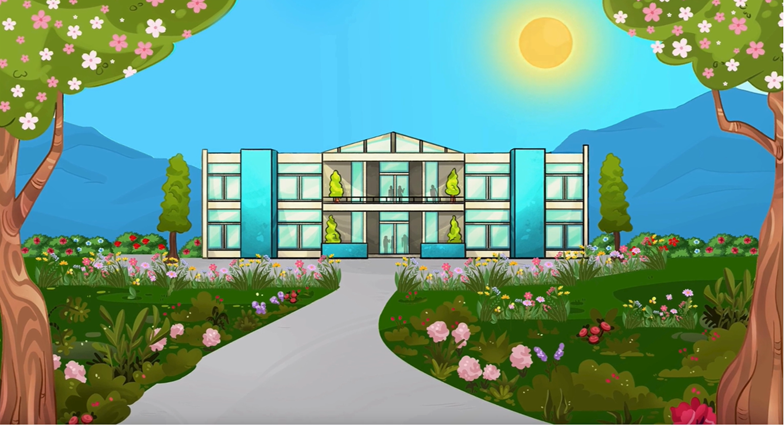
The Virtual Center for Prenatal Education consists of three hubs: Relational, Informational, and Transversal Skills, each containing three rooms. Each room includes various types of resources: information capsules, videos, doodles, slideshows, case studies, applications, and educational games designed to provide answers and solutions to questions related to pregnancy, childbirth, and the attitudes and behaviours of future parents, in order to create harmonious conditions for the development of their future child.
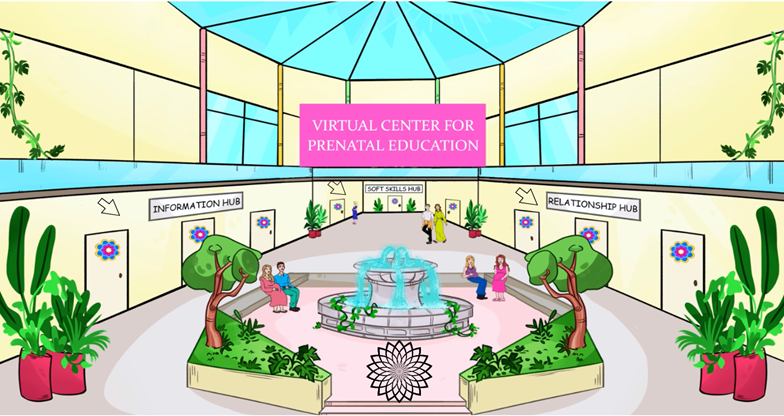
The Relational Hub includes concise information about relationships within the couple, with the family of origin, and with the future child. By visiting Rooms 1 to 3 of this hub, future parents can learn more and become more aware of their attitudes toward relational matters.
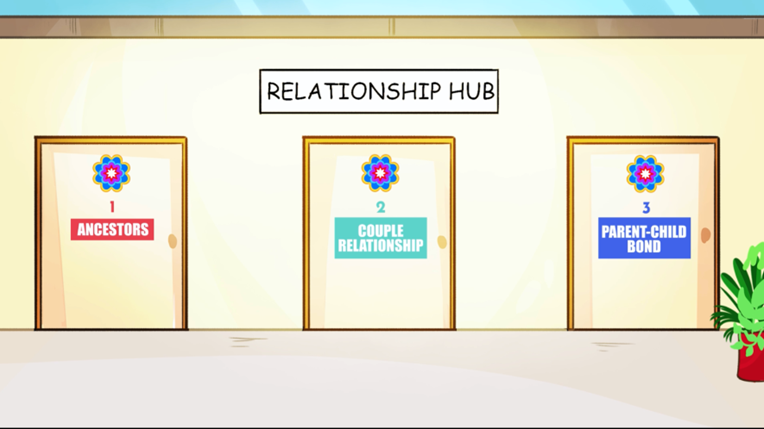
Room 1 – Relationships with Ancestors helps future parents better understand how parental influences are passed from one generation to the next. They can choose to break a harmful cycle experienced in childhood or, on the contrary, strengthen the beneficial parental behaviours they also experienced in their own lives.
Room 2 – Couple Relationships helps both partners better understand the benefits and challenges of a couple relationship, accept differences more easily, and choose to live in a harmonious relationship for their own well-being and that of their child.
Room 3 – Child Relationships helps future parents discover different ways of relating to their future child with love and respect.
The Informational Hub contains relevant information on the stages of pregnancy and childbirth, the phases of the child’s prenatal development, and elements of a healthy and environmentally friendly lifestyle for future parents. This hub includes videos, a glossary of terms, a database of scientific study summaries on the prenatal period, birth, aspects of intrauterine development, case studies, doodles, and slideshows.
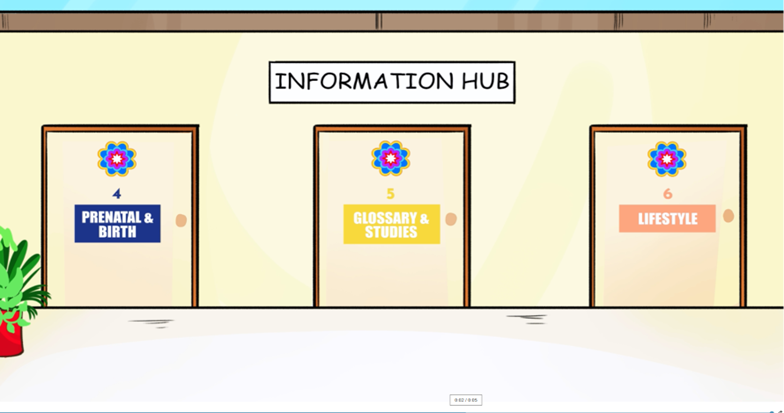
Room 4 provides information on prenatal development, pregnancy, and birth, helping future parents understand how to approach the profound experience of pregnancy and birth, as well as the most important needs of their future child during this crucial stage of development.
Room 5 contains a glossary of terms and a database of scientific studies that familiarise future parents with concepts associated with this stage of life and with the most important scientific discoveries influencing the life and health of the future human being.
Room 6 – Healthy and Eco-Friendly Lifestyle helps future parents strengthen their knowledge about what to do and what to avoid during pregnancy. This room contains approximately 300 recipes to inspire future parents to cook and, of course, eat healthily.
The Transversal Skills Hub presents interactive applications and educational games designed to foster creativity during pregnancy through music, mosaics, and painting; deepen the relationship with nature; and develop skills such as stress management, nonviolent communication, emotional intelligence, creative imagination, communication with the prenatal child, decision-making, and problem-solving.
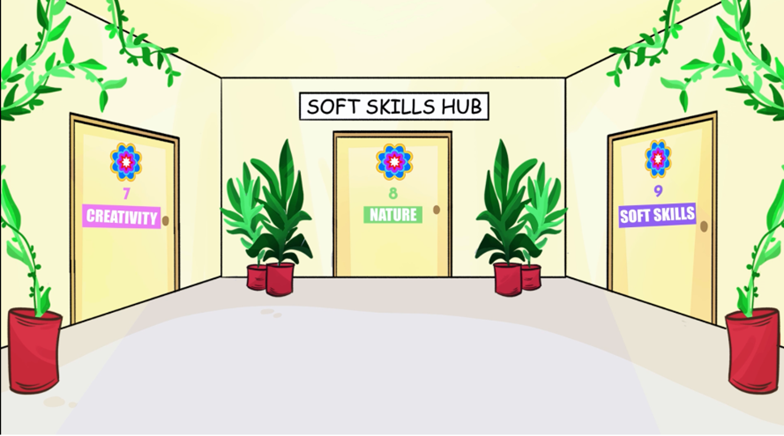
Room 7 – Creativity offers inspiration to future parents on new ways to enhance their creativity during pregnancy and beyond through music, painting, and dance.
Room 8 – Connection with Nature reinforces the idea that, through direct contact with the natural environment, future parents can discover ways to feel calmer, more confident, and healthier during pregnancy and throughout the rest of their lives.
Room 9 – Transversal Skills helps future parents become more self-aware, relax more by reducing stress, and strengthen their emotional intelligence in order to overcome conflicts and challenges more easily during pregnancy and after the birth of their child.
Each room is equipped with several applications and a feedback questionnaire to collect visitors’ impressions and opinions about the information and tools they have received.
VISIT www.omaedu.ro – VICEPRED!
This event will take place in virtual form on 18 and 19 November 2020.
These Days are organized by the Autonomous University of Madrid, by REDIPE (Network of Latin American Pedagogy), and by the National Association of Prenatal Education (ANEP).
More information by clicking on the following link: https://pedagogiaprenatal.es
And also for more information in English, click on this link on “I Jornadas Internacionales” On 18 and 19 November, you will be able to access free of charge, via the same link, the videos and conferences offered.
 Este evento se celebrará los días 18 y 19 de noviembre
En modalidad virtual
Está organizado por la Universidad Autónoma de Madrid
La Red Iberoamericana de Pedagogía, REDIPE
La Asociación Nacional de Educación Prenatal, ANEP (España)
Para más información, entrar en:
1-Tuesday 21st of July 2020
Name: Virtual Multi-Stakeholder Hearing “Accelerating the realization of gender equality and the empowerment of all women and girls” in preparation of the General Assembly high-level meeting on Beijing+25
Date: 21 July 2020 – 10am-5pm EDT
Organizer: UN Women · 405 E 42nd St · New York, NY 10017-3507 · USA –
Abstract: Twenty-five years after its adoption, the Beijing Declaration and Platform for Action remains the most comprehensive and transformative global agenda for the achievement of gender equality and the empowerment of women and girls. Unfortunately we must notice that up to now none of the countries has succeeded in realizing gender equality. We still live in a patriarchate which does not allow a healthy evolution of our humanity. The SDGs could only exist if the amount of women and men is the same as long as power is concerned.
We talked a lot about the effect of Covid-19 upon the degradation of gender equality in almost all the countries. Women had to stay home to take care of the children and there is still no way to pay this homecare job.
Men and boys must become actors when sex equality is concerned all the more the difficulties brought by Covid-19. Man must become an ally for women in all sectors, public-ministerial, private-enterprises, schools-universities and at home.
Children must be educated in that way as soon as possible; they must learn about gender equality, respect and benevolence.
2- 12 of august 2020 12 :30 PM – 14 :30 PM EDT
Name: UN Women International Youth Day 2020 Celebrations
Place: virtual
Organizer: UN women
Abstract: I was positively surprised by the determination of all those young leaders, knowing what they want and being ready to fight for a better world. This event shows the importance of letting the youth express themself because they want to participate in building the future. They are creative and full of joy of living, they bring hope to humanity.
3- 19 of august 2020 – 15:00 (CEST) – last 45 minutes
Name: Geneva World Humanitarian Day Commemoration – Annual observance of World Humanitarian Day
Place: Palais des Nations à Genève
Organizer: The commemoration is organized in collaboration with the United Nations Office for the Coordination of Humanitarian Affairs (OCHA)
Abstract: This commemoration although being on line was very emotional. Above the 22 victims of Bagdad were mentionned numerous other UNO’s humanitarian who were killed, wounded or kidnapped in several countries all over the world. Those workers take the risk of their life in order to help people who are deprived of their simple human rights. Several of them came back from their humanitarian mission physically and psychologically weakened because the field of their duty affectation is difficult even dangerous. It is only because they bring high the ONU’s humanitarian ideal that they scarify themselves to help others with the hope to create a better future for humanity. They feel themselves unified to others and they know that humanity is ONE.
4-31 of august 2020
Name: Virtual Townhall Meeting of Civil Society and United Nations Secretary-General António Guterres
Time: 10:00am – 11:15am EST
Organizer: UN Women Executive Director, Phumzile Mlambo-Ngcuka
UN Women · 405 E 42nd St · New York, NY 10017-3507 · USA
Abstract: Women’s civil society organizations’ perspectives help to informing effective response and recovery. Young women are particularly impacted – from education to job opportunities. They have also been those at the forefront of calling for a recovery that is more inclusive, equal, climate just, and resilient.
This crisis shows that we must fight a big battle against those who think that they can solve the situation by themselves. We need to find international solutions all together
Two ways of reacting: at the global level working with governments by giving them recommendations which is a drop in the ocean, and in an inclusive way redistributing the power through a real democracy where government, associations, organizations, civil societies and youth associations work all together. Young people must be present everywhere and in government, they must be helped to become official organizations.
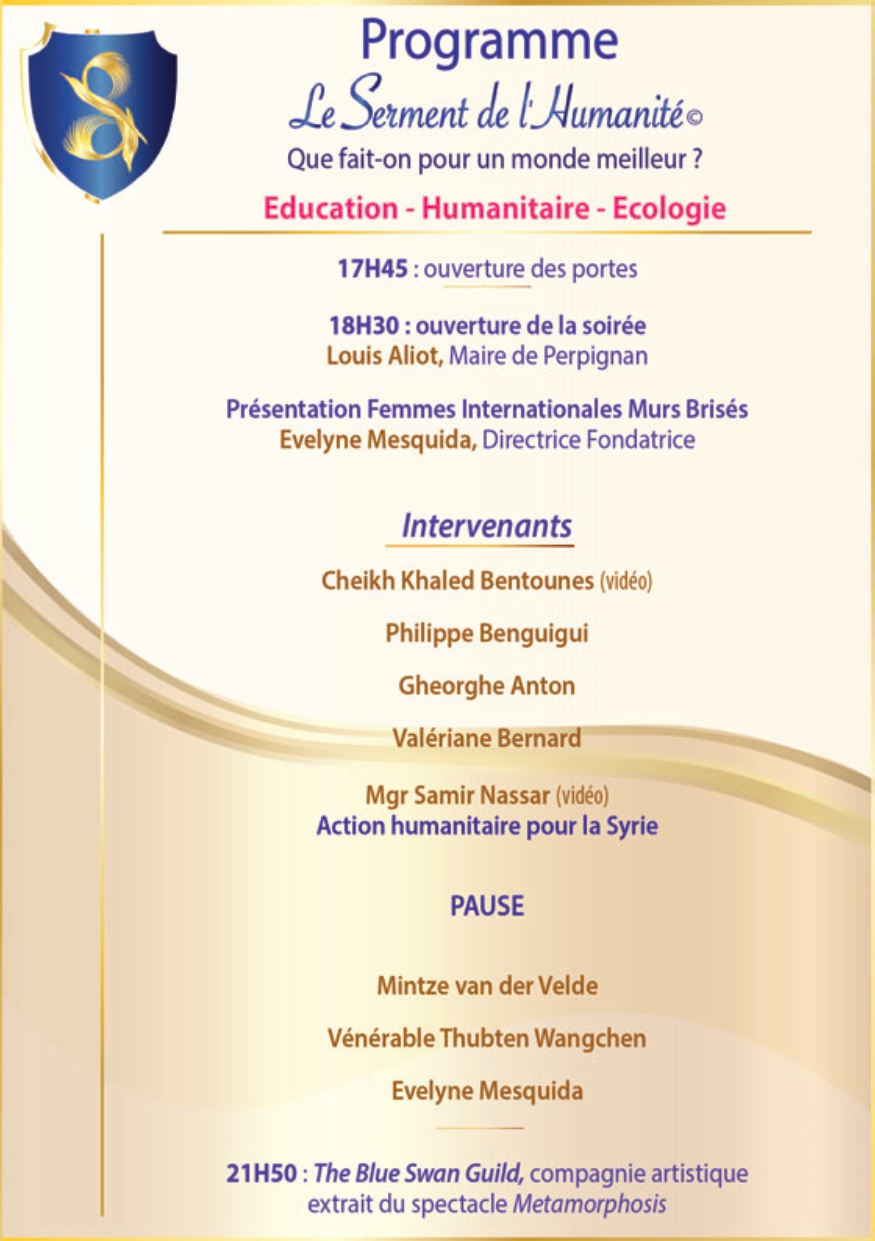
If only one woman can already cause a fuss, just imagine 6.000 women from all over the world gathered in one place to herald and defend their causes. Strange, to say the least, or funny. But in my opinion, moving.
It’s Saturday March 2nd, 2013, and the skies are cloudy when my 14-year-old daughter and I exit New York city’s Grand Central Station and walk towards the United Nations headquarters. I immediately sense that something different and magical is going to happen. On 44th Street, we join a group of women from India who are walking at a spirited pace and seem very convinced of their cause. Then some Chinese women start following us and further ahead, there are African women with their beautiful turbans. When we arrive in front of the UN, I spot a stopped car and next to it a woman is hugging a man goodbye. Her face looks familiar, I have already seen her on Facebook, it’s Barbara Pellegrini, one of the persons from the OMAEP group (World Organization of the Associations for Prenatal Education). What is the probability of arriving exactly at the same time as one of the six people I know, among 6.ooo women? Yes, one chance in a thousand. From that moment on, I have no doubt that the days to come will be of great importance.
The themes are overwhelming, my heart sinks as I go over the titles of the sessions of this CSW57 (57th Session of the Commission on the Status of Women), which addresses the violence against women and girls. Among these titles: How to end domestic violence; Sexual exploitation; Genital mutilation; Girl Trafficking; Underage Marriage… my God, how has humanity come to this???
So many people reporting data, statistics, denouncing the extent of the wound and its depth, yet most solutions are reduced to treaties. A large number of countries signed the Beijing Treaty created at the 4th World Conference on Women in Beijing in 1995, which identified violence against women as one of the twelve challenges of the future requiring special attention and the adoption of measures by governments, the international community as well as civil society… Was this enough?
The good news is that OMAEP and FEFAF (Fédération Européenne des Femmes Actives en Famille) organized an event at this CSW57 on the importance of violence prevention and how this prevention starts very early in life, in the womb! Their round table discussion was a success and the audience received the message that creating an atmosphere of love, harmony and tranquility for pregnant women and their partners significantly reduces societal violence, the energy and expenses involved in remedying and fighting it.
We must act on the cause, from the inside out.
When a tree starts bourgeoning and has little room to grow, it twists and turns to find its place in the sun at all costs, because survival is what matters most. Once this tree reaches adulthood, it is quite difficult to correct its shape and attempting to do so may even break it. However, if when the stem is still frail, just emerging from the soil, we make room for it in us, in our personal life and in society at large, it grows straight, confident and later on takes its place in the world and bears fruits!
Unlock the Power of Pregnancy – For Parents, Families, and Professionals
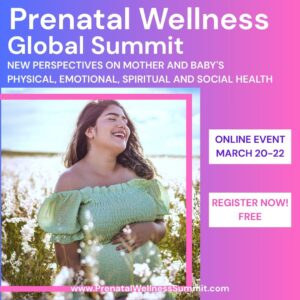
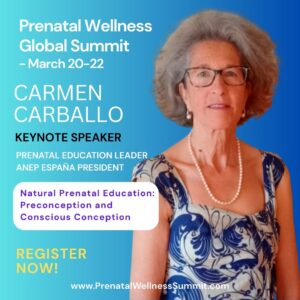
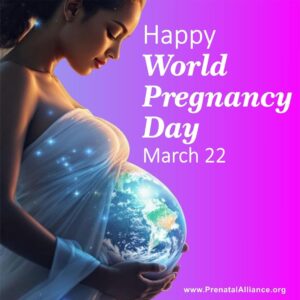
Once again, OMAEP has been invited to present a talk entitled: Natural Prenatal Education. Preconception and Conception: the beauty and love of the beginning of life at the Prenatal Alliance’s Prenatal Wellbeing Summit, which will take place online from 20 to 22 March 2026. As every year, renowned and prestigious speakers from around the world will be in attendance. We encourage you to register.
Whether you are expecting a baby, supporting a loved one, or working as a maternal health professional, understanding the profound influence of the prenatal period allows you to foster optimal physical, emotional, and psychological development. The Prenatal Wellness Summit offers evidence, practical tools, and inspiring insights to guide families and professionals in creating the healthiest beginnings for every baby.
What You Will Learn in the Summit:
 How the Pregnancy Journey shapes lifelong health and development
Practical workshops and evidence-based tools for prenatal care
Supporting parent-baby and family connections before birth
Understanding the prenatal origins of long-term health
Best practices in labor, birth, and postpartum care
Exploring prenatal memory and early emotional development
Guiding the spiritual and relational journey of mother, baby, and family
The social impact of a positive, supportive pregnancy experience
Who is this Summit for?
Expectant parents and couples
Health professionals (obstetricians, nurses, midwives, physiotherapists)
Doulas, perinatal educators, and lactation consultants
Psychologists, therapists, trauma and mental health professionals
Yoga, mindfulness, and mind-body instructors
Researchers, students, and academics
Anyone interested in early life and care
Program: https://prenatalwellnesssummit.com/program.html
Register now for free: https://subscribepage.io/faG1Bv
International Congress
Neurosciences, Prenatal and Postnatal Violence, and Legal and Medico-Legal Protection:
Towards Integrated Protection for Mothers, Unborn Children, and Children
OMAEP attended the International Congress on Neurosciences, Prenatal and Postnatal Violence, and Legal and Medico-Legal Protection: Towards Integrated Protection for Mothers, Unborn Children, and Children, which was held at the European Parliament in Strasbourg on 3 December 2025.
It was organized by PSAF (Scientific Association of Medico-Legal Health Professionals and Insurers of Italy), in partnership with ASMI Spain, and with the collaboration of the Maternal Mental Health Alliance, APRODEME (Association for the Defense of Minors), and Conecta Perinatal, of which ANEP Spain is a member.
The congress was held both in person and online, with simultaneous translation into English, French, and Spanish. It brought together a significant group of scientists from different countries and continents, specialized in various fields: physicians, clinical psychologists, psychiatrists, clinical and forensic neuroscientists, neuropsychologists, psychotherapists, professors, and professionals from the legal field, including lawyers and a juvenile judge. The congress program attached contains all the information on the objectives, speakers, professions, and related details.
It is particularly important to highlight the Italian contribution, which took place during three of the four sessions of the congress, and the Spanish contribution, notably with the presence of Pascual Palau Subiela, president of Conecta Perinatal, Alain Grégoire, president of the Maternal Mental Health Alliance, and B. Golse, president of the Institut de l’enfance (France).
All the presentations were of a high level and marked by great scientific rigor, but they were also delivered with remarkable sensitivity, quality, and human warmth.
This congress was extremely enriching and allowed us to confirm, once again, what great pioneers such as Verny, Chamberlain, Relier, Odent, Lipton, and others have reflected in their writings and conferences for several decades. It was especially interesting to hear, for the first time in an institution such as the European Parliament, from the perspective of neurosciences, about the effect of prenatal and perinatal violence on brain development, as well as about stress and its negative impact on pregnant women and babies. All the speakers generally agreed on the importance of the factor of “prevention.”
In 2023, 19,000 women in Italy went to emergency departments because of domestic violence, underlining the negative implications of pain on the prenatal baby and the importance of educating for affectivity. Creating emotional bonds of love can change everything.
When the unborn baby or child is exposed to violence and grows up in fear, he or she remains in a state of alert. The task, therefore, is not only to repair, but also to give meaning to life. It is important to prioritize care over academic achievement. It is necessary to care for life, and not merely manage it, and to develop the ability to recognize the other as a person.
Protecting the pregnant woman means protecting the baby. The protection of the child begins with the unborn baby. The child’s health depends on the environment in which the mother lives.
If a pregnant woman is subjected to violence, this later affects the baby’s posture: scoliosis and vision problems associated with scoliosis. Posture can affect brain development. Trauma and family secrets affect posture and the expression of the mouth and eyes, and are transmitted from generation to generation, as psychogenealogy teaches us. That is why it is important to develop prevention strategies. Prevention is necessary.
The need to provide pregnant women with tools such as mindfulness and meditation was also discussed, since these can help them go through this period and thus counter anxiety and distressing thoughts that increase cortisol levels, reducing anxiety, integrating emotions, and bringing calm.
Protecting the mother from violence means protecting future generations!
The issue of the right to health of the unborn child and the child within the legal framework was also addressed. The unborn child has the same rights (life, health, dignity) to physical and psychological integrity as the born person. If visible children are not protected, those who are not visible are protected even less.
Neurosciences demonstrate that the child who has suffered prenatal or perinatal violence is to be considered a victim.
As for the Spanish contribution, it focused mainly on preventing violence linked to the separation of mothers and children in vulnerable families. In this sense, Pascual Palau, president of Conecta Perinatal, stated that it is necessary to generate new scientific, social, and legal perspectives that promote in Europe and the rest of the world the best possible care for families in difficulty and their babies. He stated that if we continue to separate mothers constantly because of their past problems, we will continue to transmit this problem from generation to generation, and it will not be possible to remedy the situation.
This was also the perspective of lawyer Vila Torres, who stated that this situation is creating a problem in Spain. Only 10% of these separations are justified, out of the 60,000 cases of removal due to abandonment. He concluded by saying that the child must occupy an important place in society, that attention must focus on the child during the first year of life, and that it is necessary to invest in pregnancy and in the first three years of life.
B. Golse, president of the Institut de l’enfance, explained that early separations constitute a risk and that the effects of mother-baby separation are devastating.
The last intervention from the Spanish group was that of juvenile judge Elena Crespo, who stated that the growth of a child must take place within the family, that mother-child separations should occur only in justified situations, and that separations often lead to a violation of the rule of law. She concluded by saying that the priority must be to favor the development of a human being in a healthy emotional environment, so as to form citizens and leaders who help us move beyond wars and other calamities. Love is what society needs in order to live in freedom. A society with a healthy childhood will be a healthy society.
The final intervention of the congress was delivered by the Italian doctor Mariarosaria Greco, who stated at the end of her presentation that prevention strategies must be established to help the mother and baby during the gestational period. She concluded by saying:
“This must be integrated into schools; this information must be passed on to them.”
To conclude, we would like to congratulate the organizers of this event, because it made it possible to bring to the European Parliament all this knowledge about the importance of the prenatal and perinatal period, and the need to preserve and protect it for the future of coming generations. May what was presented there resonate in as many consciences as possible, so that the crucial importance of the prenatal and perinatal period may spread and become a hope for the good of humanity.
OMAEP Board of Directors
 English
  Français